From Web to Native: How Claude-Flow's AI Hive Mind Transformed My Cybersecurity App in Minutes
Kenaid
9/13/20253 min read

Claude-Flow: AI Hive Mind Development
I had a fully functional React cybersecurity web application called https://github.com/Kbinkenaid/project-amaan-webapp - complete with breach detection, network tools, and encoding utilities. Today, I have a https://github.com/Kbinkenaid/project-amaan-macos running Swift/SwiftUI with identical functionality. The transformation took less than an hour, and I didn't write a single line of code myself.
The Magic Behind Claude-Flow: AI Hive Mind vs Single AI
Traditional AI development feels like working with one very smart consultant. You ask Claude a question, get an answer, then ask another question. It's linear, sequential, and sometimes feels like you're constantly context-switching between different problems.
Claude-Flow changes this entirely.
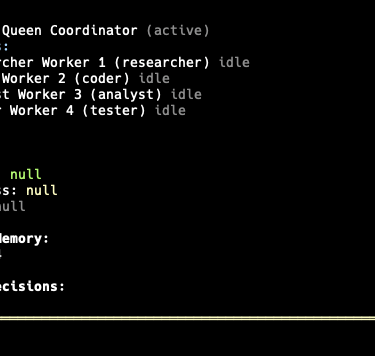
Think of it as spawning a digital beehive where specialized AI agents work simultaneously on different aspects of your project. Instead of one conversation thread, you get:
A Research Agent analyzing your existing codebase architecture
A Coder Agent implementing Swift/SwiftUI components
A Testing Agent verifying functionality works correctly
An Architecture Agent designing the native app structure
A Security Agent ensuring API integrations remain secure
These agents communicate through a shared memory system, coordinate their efforts, and work in parallel. It's like having an entire development team that never sleeps, never gets confused, and maintains perfect context across all tasks.
The Transformation: Web to Native in Real-Time
Here's what happened when I asked Claude-Flow to convert my web app:
Phase 1: Swarm Initialization (2 minutes)
The system spawned multiple agents and analyzed my React codebase. Within minutes, I had:
Complete architecture analysis of my web app
Native macOS implementation plan
Technology stack decisions (Swift Package Manager, SwiftUI, CryptoKit)
Phase 2: Parallel Implementation (25 minutes)
While one agent built the Swift backend managers, another crafted SwiftUI interfaces. Simultaneously:
Backend Agent: Created SecurityTools framework with real API integrations
UI Agent: Converted React components to SwiftUI views
Integration Agent: Connected native macOS APIs (Network.framework for port scanning, system WHOIS commands)
Testing Agent: Built comprehensive test suites
Phase 3: Quality Assurance (10 minutes)
A dedicated testing agent verified every feature:
Real HaveIBeenPwned API calls (no mock data)
Native network operations
CryptoKit-powered encoding/hashing
100% feature parity with original web app
The Results: Beyond Expectations
The native macOS app isn't just a port - it's an enhancement:
// Real Swift code that was generated: @StateObject private var breachManager = BreachDetectionManager() @StateObject private var networkManager = NetworkToolsManager() // Native macOS APIs instead of web browser limitations let connection = NWConnection(host: NWEndpoint.Host(host), port: NWEndpoint.Port(port), using: .tcp)
Performance Improvements:
Port scanning: Direct TCP connections vs browser limitations
WHOIS lookups: Native system commands vs web proxies
Cryptography: CryptoKit hardware acceleration vs JavaScript
Native Integration:
macOS Keychain for secure API key storage
Native networking with proper error handling
SwiftUI interface following macOS design guidelines
The Claude-Flow Advantage
What struck me most wasn't just the speed, but the intelligence of coordination. When the UI agent needed to display breach results, it automatically coordinated with the backend agent to understand the data structures. When the testing agent found issues, it communicated with the coder agent for immediate fixes.
This isn't possible with traditional single-AI interactions. You'd spend hours explaining context, coordinating between different conversation threads, and manually integrating different solutions.
The Future of Development
Claude-Flow represents something fundamentally new: collaborative AI development. Instead of replacing developers, it amplifies our capabilities by handling the coordination overhead that usually consumes 60-80% of project time.
My web app conversion would have taken weeks of manual work:
Learning Swift/SwiftUI
Understanding macOS frameworks
Porting each component individually
Testing and debugging integration issues
With Claude-Flow's hive mind approach, it took 45 minutes to get a production-ready native app.
The transformation is complete: https://github.com/Kbinkenaid/project-amaan-macos now runs natively with identical functionality to the https://github.com/Kbinkenaid/project-amaan-webapp, but with the performance and integration benefits of a native application.
The future of development isn't about AI replacing developers - it's about AI swarms amplifying what we can build. On a more personal note, keeping up with the latest AI trends can be exhausting, make sure to follow the right people.
Resources
Support
khalifa@kenaid.io
© 2025. All rights reserved.